
Year 2025 Activities Report
During 2025, Feeding Albania worked to strengthen food security, reduce food waste, support communities affected by wildfires, and promote sustainable food and farming practices.
Education and community engagement
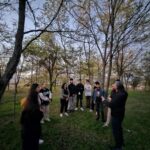
We held a training session with young people from the Evangelical Church of Korçë on managing trees in shared community spaces. We also shared practical guidance on reducing household food waste, including planning purchases, managing food storage, preserving food, composting, and redirecting surplus food to people in need.
Support for families affected by wildfires
Following the summer wildfires, we helped in supporting families in the administrative unit of Skënderbegas, Gramsh. The fires had damaged homes, grazing areas, and stored animal feed, leaving local households and livestock facing a difficult winter.
We also raised awareness of Farmer Managed Natural Regeneration (FMNR) as an approach to restoring trees and vegetation and helping communities manage fire risk. Our communications highlighted how land management practices may be adapted to different landscapes across Albania.
Sustainable food and farming initiatives
Through the Farm to Fork initiative in Yzberish, a few local businesses have contributed materials for building organic gardens and composting. The project showed how community partnerships and local resources can help establish gardens at low cost. We encouraged schools and youth groups to create organic gardens for learning and growing food.
We also shared information about intercropping, organic farming, tree management, and biological pest control as practices that can support soil health and more sustainable food production.
Food assistance
In partnership with kindergarten Piccolo Tirana, volunteers, and the Municipality of Klos, we distributed food parcels to children from 75 families in need.
Looking ahead
Our 2025 activities combined direct food assistance with education and practical initiatives. We will continue working with communities, local businesses, volunteers, and institutions to reduce food waste, support families, and encourage resilient and sustainable food systems.